
Introduction: The Battle for Datacenter Supremacy
The rivalry between Intel Xeon and AMD EPYC has reached its most intense point in 2026. With Intel's 6th Generation Xeon Scalable (Granite Rapids) processors going head-to-head against AMD's 5th Generation EPYC 9005 (Turin) series, enterprise buyers have never had more compelling options — or more difficult decisions to make.
For IT decision-makers in the UAE, Saudi Arabia, and across the GCC region, the choice between Intel Xeon and AMD EPYC affects everything from server procurement costs to long-term operational expenses, application performance, and even your ability to attract AI workloads. This comprehensive comparison will help you make an informed decision based on real-world performance data, architectural analysis, and practical recommendations tailored to enterprise deployments.
At Omnixon Global, we supply both Intel Xeon and AMD EPYC-based servers from all major brands, giving you unbiased guidance on which platform best fits your workload requirements.
Current Generation Overview: 2025-2026 Lineup
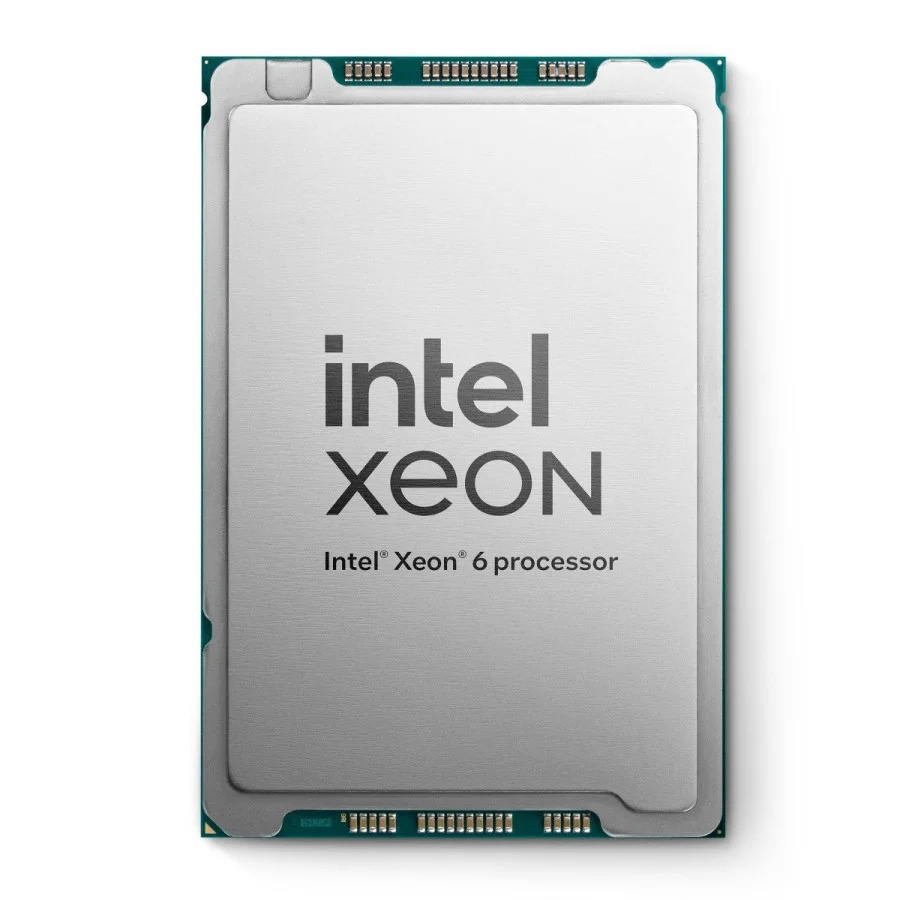
Intel Xeon 6 (Granite Rapids-SP) — 6th Generation
Intel's latest Xeon 6 processors represent the most significant architectural leap in Intel's server CPU history. Built on the Intel 3 process node, these processors offer dramatic improvements in performance-per-watt and core density compared to the previous Emerald Rapids generation.
| Specification | Intel Xeon 6 P-Core (Granite Rapids) | Intel Xeon 6 E-Core (Sierra Forest) |
|---|---|---|
| Max Cores per Socket | 128 P-cores | 288 E-cores |
| Max TDP | 500W | 350W |
| Memory Channels | 12x DDR5 | 8x DDR5 |
| Max Memory per Socket | 12TB DDR5 (MRDIMMs) | 4TB DDR5 |
| PCIe Lanes | 96x PCIe 5.0 | 96x PCIe 5.0 |
| CXL Support | CXL 2.0 | CXL 2.0 |
| AI Acceleration | Intel AMX (BF16, INT8, FP16) | Intel AMX |
| Process Node | Intel 3 | Intel 3 |
The Xeon 6 lineup introduces a revolutionary dual-architecture strategy: P-core (Performance) processors for compute-intensive workloads, and E-core (Efficiency) processors for throughput-optimized, density-focused deployments. This allows organizations to match the right silicon to each workload type.
👉 Browse Intel Xeon processors at Omnixon Global
AMD EPYC 9005 (Turin) — 5th Generation
AMD's EPYC 9005 "Turin" processors continue AMD's aggressive push into the datacenter market. Built on the Zen 5 architecture with TSMC's advanced 3nm and 4nm process nodes, Turin delivers significant improvements in both performance and efficiency.
| Specification | AMD EPYC 9005 (Turin Standard) | AMD EPYC 9005 (Turin Dense) |
|---|---|---|
| Max Cores per Socket | 192 cores | 192 cores (Zen 5c) |
| Max TDP | 500W | 400W |
| Memory Channels | 12x DDR5 | 12x DDR5 |
| Max Memory per Socket | 6TB DDR5 | 6TB DDR5 |
| PCIe Lanes | 128x PCIe 5.0 | 128x PCIe 5.0 |
| CXL Support | CXL 2.0 | CXL 2.0 |
| AI Acceleration | AVX-512 (BF16, FP16) | AVX-512 |
| Process Node | TSMC 4nm / 3nm | TSMC 3nm |
AMD's chiplet-based design allows them to offer up to 192 cores per socket — significantly more than Intel's 128 P-cores. This core density advantage makes EPYC particularly compelling for heavily parallelized workloads.
Head-to-Head Performance Comparison
Multi-Threaded Performance
In multi-threaded workloads, AMD EPYC holds a clear advantage thanks to its higher core counts. The EPYC 9965 with 192 cores delivers approximately 40-50% more throughput than the top Intel Xeon 6980P with 128 cores in workloads that can fully utilize all available cores. This makes EPYC the preferred choice for:
- Virtualization — More cores means more VMs per host, reducing the total number of servers needed
- Compilation and CI/CD — Parallel build processes benefit directly from higher core counts
- High-Performance Computing (HPC) — Scientific simulations scale nearly linearly with core count
- Video rendering and transcoding — Embarrassingly parallel workloads that scale with cores
Single-Threaded Performance
Intel Xeon 6 P-cores maintain a slight edge in single-threaded performance, typically 5-10% faster per-core than AMD's Zen 5 cores at equivalent clock speeds. This advantage matters for workloads that cannot be easily parallelized:
- Database transactions — SQL Server, Oracle, and PostgreSQL often bottleneck on single-thread performance
- ERP applications — SAP and Oracle EBS have many single-threaded components
- Legacy applications — Older software that was not designed for multi-core scaling
- Licensing-sensitive workloads — When software is licensed per-core, fewer faster cores can be more cost-effective
AI and Machine Learning Inference
Intel's Advanced Matrix Extensions (AMX) provide a significant advantage for AI inference workloads running on CPUs. AMX accelerates matrix multiplication operations in BF16 and INT8 formats, delivering up to 10x faster AI inference compared to previous-generation Xeon processors without AMX. This makes Intel Xeon 6 the better choice for organizations running AI inference at the edge or in environments where GPU acceleration is not available.
AMD counters with AVX-512 support and broader ecosystem compatibility, but Intel's AMX provides a clear architectural advantage for AI-specific workloads on the CPU.
Memory and I/O
| Feature | Intel Xeon 6 (Granite Rapids) | AMD EPYC 9005 (Turin) | Winner |
|---|---|---|---|
| Memory Channels | 12 | 12 | Tie |
| Max Memory Speed | DDR5-6400 (MRDIMM) | DDR5-6000 | Intel (slightly) |
| Max Memory Capacity | 12TB (MRDIMM) | 6TB | Intel |
| PCIe 5.0 Lanes | 96 | 128 | AMD |
| CXL Support | CXL 2.0 | CXL 2.0 | Tie |
| Max Bandwidth/Socket | ~614 GB/s | ~576 GB/s | Intel (slightly) |
Intel takes the lead in memory capacity with MRDIMM support enabling up to 12TB per socket — double AMD's 6TB maximum. This is critical for in-memory databases and large-scale virtualization. AMD counters with more PCIe lanes (128 vs 96), providing more bandwidth for NVMe storage and GPU accelerators.
Total Cost of Ownership (TCO) Analysis
The true cost of a server extends far beyond the purchase price. For a typical 3-year deployment in a GCC datacenter, here is how the TCO breaks down:
| Cost Component | Intel Xeon 6 Platform | AMD EPYC 9005 Platform | Notes |
|---|---|---|---|
| Server Hardware (2U, dual-socket) | Quote on request | Quote on request | AMD typically 5-10% lower |
| Per-Core Software Licensing (3yr) | Lower (fewer cores needed) | Higher (more cores = more licenses) | Depends on vendor |
| Power Consumption (3yr) | Quote on request | Quote on request | AMD slightly more efficient |
| Cooling Costs (3yr, GCC climate) | Quote on request | Quote on request | AMD's lower TDP helps |
| Estimated 3-Year TCO | Quote on request | Quote on request | AMD typically lower overall |
Important note on software licensing: Many enterprise software vendors (Microsoft SQL Server, VMware, Oracle) license per-core. With AMD offering up to 192 cores per socket, the licensing cost can be significantly higher than an Intel platform with fewer, faster cores achieving similar performance. Always calculate your specific software licensing costs before deciding.
Which Servers Use Each Processor?
Popular Intel Xeon-Based Servers
| Server | Brand | Form Factor | Link |
|---|---|---|---|
| PowerEdge R760 | Dell | 2U Rack | View Product |
| ProLiant DL380 Gen11 | HPE | 2U Rack | View Product |
| ProLiant DL360 Gen11 | HPE | 1U Rack | View Product |
| ThinkSystem SR650 V3 | Lenovo | 2U Rack | View Product |
| PowerEdge R650 | Dell | 1U Rack | View Product |
Popular AMD EPYC-Based Servers
| Server | Brand | Form Factor | Link |
|---|---|---|---|
| ThinkSystem SR680a V3 | Lenovo | 4U Rack | View Product |
| HPE Helios Rack AMD | HPE | Rack | View Product |
| AS-4125GS-TNRT | Supermicro | 4U GPU Server | View Product |
Intel Xeon Processors Available
| Processor | Cores | Best For | Link |
|---|---|---|---|
| Xeon Platinum 8268 | 24 | Enterprise Workloads | View |
| Xeon Platinum 8352Y | 32 | Virtualization | View |
| Xeon Gold 4510 | 12 | Cost-Effective Compute | View |
| Xeon Gold 5218R | 20 | Balanced Performance | View |
AMD EPYC Processors Available
| Processor | Cores | Best For | Link |
|---|---|---|---|
| EPYC 9654 | 96 | Maximum Performance | View |
| EPYC 9654P | 96 | Single-Socket Value | View |
| EPYC 9274F | 24 | High-Frequency Workloads | View |
| EPYC 9254 | 24 | Cost-Effective | View |
Workload-Specific Recommendations
| Workload | Recommended Platform | Why |
|---|---|---|
| Virtualization (VMware/Hyper-V) | AMD EPYC | More cores = more VMs per host, lower TCO |
| SQL Server / Oracle Database | Intel Xeon | Better single-thread, per-core licensing savings |
| SAP HANA | Intel Xeon | Certified, larger memory capacity (12TB) |
| AI Inference (CPU-based) | Intel Xeon | AMX acceleration provides 10x speedup |
| AI Training (GPU-based) | AMD EPYC | More PCIe lanes for GPU connectivity |
| HPC / Scientific Computing | AMD EPYC | Core density and memory bandwidth |
| Web Hosting / Microservices | AMD EPYC (E-core equivalent) | Throughput-optimized, cost-effective |
| File Server / NAS | Either | Not CPU-bound; choose based on price |
| VDI (Virtual Desktop) | Intel Xeon | Better single-thread for desktop responsiveness |
| Edge Computing | Intel Xeon | Broader ecosystem, better power efficiency at lower core counts |
GCC-Specific Considerations
Power and Cooling in Hot Climates
Datacenters in Dubai, Riyadh, and Doha face unique challenges due to extreme ambient temperatures that can exceed 50°C. Both Intel and AMD have improved power efficiency significantly, but AMD's chiplet design generally produces less heat per core, which can translate to meaningful cooling cost savings in GCC datacenters where cooling represents 30-40% of total operating costs.
Electricity Costs
While electricity is relatively affordable in the GCC compared to Europe, the sheer scale of modern datacenter deployments means power efficiency still matters. AMD EPYC processors typically deliver 10-15% better performance-per-watt than equivalent Intel Xeon processors in multi-threaded workloads, which can add up to significant savings over a 3-5 year server lifecycle.
Sourcing in the UAE
Buyers in the UAE can request quotes for both Intel Xeon and AMD EPYC-based servers through Omnixon Global. Intel has a longer history in the GCC market and a broader ecosystem of local partners, while AMD's presence has grown significantly since the EPYC launch.
Frequently Asked Questions
Is AMD EPYC better than Intel Xeon in 2026?
It depends on the workload. AMD EPYC offers more cores and better multi-threaded performance, making it ideal for virtualization and HPC. Intel Xeon offers better single-threaded performance and AI acceleration (AMX), making it better for databases and AI inference. Neither is universally "better" — the right choice depends on your specific use case.
Can I mix Intel and AMD servers in the same datacenter?
Absolutely. Many enterprise datacenters run both platforms, using Intel for database and ERP workloads while using AMD for virtualization and compute-intensive tasks. This "best of both worlds" approach is increasingly common.
Which processor is more cost-effective for virtualization?
AMD EPYC typically offers better value for virtualization because you get more cores per dollar, allowing you to consolidate more VMs onto fewer physical servers. However, if you are running per-core licensed software (like SQL Server), Intel's fewer-but-faster cores may be more cost-effective overall.
Where can I buy Intel Xeon and AMD EPYC servers in the UAE?
Omnixon Global supplies both Intel Xeon and AMD EPYC-based servers from Dell, HPE, Lenovo, and Supermicro across the UAE and GCC region. Contact us for expert guidance on choosing the right platform for your workload.
Conclusion: Let Your Workload Decide
The Intel Xeon vs AMD EPYC debate in 2026 is not about which processor is "better" — it is about which processor is better for your specific workload. Both platforms have reached exceptional levels of performance, reliability, and efficiency. The key is to match the right silicon to the right job.
Choose Intel Xeon if you prioritize single-threaded performance, AI inference acceleration, maximum memory capacity, or run per-core licensed software.
Choose AMD EPYC if you need maximum core density, best multi-threaded throughput, more PCIe lanes for GPUs/NVMe, or want the lowest TCO for virtualization workloads.
Omnixon Global is vendor-neutral and supplies both Intel and AMD platforms. Our team of enterprise IT specialists can help you benchmark, configure, and deploy the optimal server infrastructure for your GCC datacenter. Request a consultation today.