
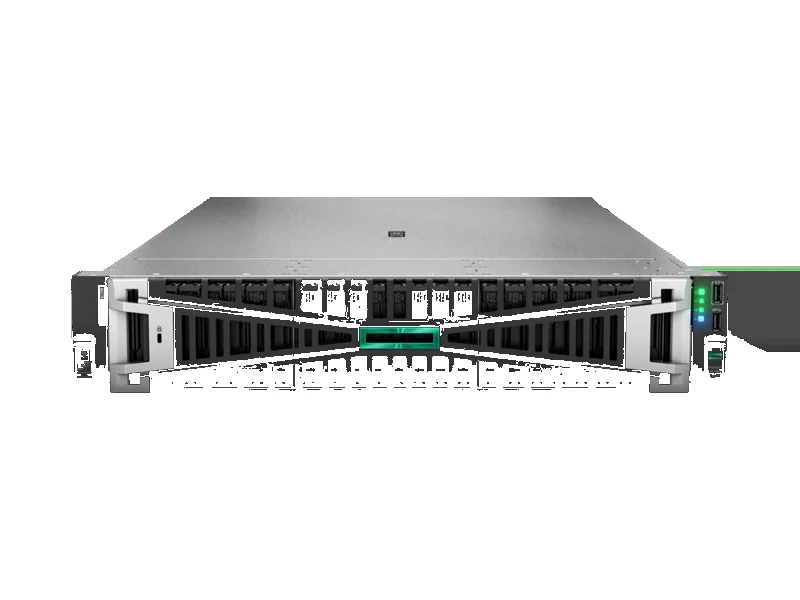
Introduction: Two Titans of the 2U Rack Server Market
The HPE ProLiant DL380 Gen11 and the Dell PowerEdge R760 are the two most popular 2U rack servers in the world. Together, they power millions of enterprise workloads across every industry — from financial services and healthcare to cloud computing and artificial intelligence. For IT professionals in the UAE, Saudi Arabia, and across the GCC region, these two servers represent the default shortlist when procuring new datacenter infrastructure.
But which one should you choose? While both servers share similar specifications on paper, the differences in management capabilities, security features, ecosystem integration, and total cost of ownership can significantly impact your organization's IT operations over a 5-7 year server lifecycle.
In this comprehensive comparison, we analyze every aspect of both servers — from hardware specifications to management software, security features, support options, and real-world performance — to help you make an informed decision. Both servers are available through Omnixon Global with tailored quotes and full support across the GCC.
Hardware Specifications Comparison
| Specification | HPE ProLiant DL380 Gen11 | Dell PowerEdge R760 |
|---|---|---|
| Form Factor | 2U Rack | 2U Rack |
| Processor Support | Up to 2x Intel Xeon Scalable 4th/5th Gen | Up to 2x Intel Xeon Scalable 4th/5th Gen |
| Max Cores (Dual Socket) | 120 cores (2x 60-core) | 120 cores (2x 60-core) |
| Memory Slots | 32x DDR5 DIMM | 32x DDR5 DIMM |
| Max Memory | 8TB DDR5-4800 | 8TB DDR5-4800 |
| Max SFF Drives | Up to 24x SFF | Up to 24x SFF |
| Max LFF Drives | Up to 12x LFF | Up to 12x LFF |
| NVMe Support | Up to 24x NVMe | Up to 24x NVMe |
| PCIe Slots | Up to 10x PCIe 5.0 | Up to 8x PCIe 5.0 |
| GPU Support | Up to 2x double-width | Up to 3x double-width |
| Network (Onboard) | 1x OCP 3.0 slot | 1x OCP 3.0 slot |
| Power Supply | Up to 2x 1600W (Titanium) | Up to 2x 2400W (Titanium) |
| Management | HPE iLO 6 | Dell iDRAC9 |
| Max Operating Temp | Up to 40°C (ASHRAE A3) | Up to 40°C (ASHRAE A3) |
Key takeaway: The hardware specifications are remarkably similar. Dell offers slightly more GPU slots (3 vs 2) and higher wattage power supplies, while HPE provides more PCIe expansion slots (10 vs 8). For most enterprise workloads, these differences are marginal.
Management and Remote Access
Server management is where these two platforms diverge most significantly. Both offer enterprise-grade remote management, but the approach and capabilities differ in important ways.
HPE iLO 6 (Integrated Lights-Out)
HPE's iLO 6 is widely regarded as the most mature and feature-rich server management platform in the industry. Key capabilities include:
- Always-on management — iLO operates independently of the server OS, with its own dedicated processor, memory, and network connection
- HTML5 remote console — Full graphical console access without Java or ActiveX plugins
- Agentless management — Collects health and inventory data without installing agents on the OS
- Intelligent Provisioning — Built-in deployment and configuration tool
- RESTful API — Full programmatic access via Redfish API for automation
- Security dashboard — Real-time security posture monitoring
HPE also offers iLO Advanced (paid license) which adds features like persistent remote console, video recording, and federation management for large deployments.
Dell iDRAC9 (Integrated Dell Remote Access Controller)
Dell's iDRAC9 has improved significantly in recent generations and now closely matches iLO in most capabilities:
- Lifecycle Controller — Embedded deployment and update engine that simplifies provisioning
- HTML5 virtual console — Browser-based remote access without plugins
- Telemetry streaming — Real-time server telemetry data for monitoring and analytics
- Group Manager — Manage up to 250 servers from a single iDRAC interface
- RESTful API — Redfish-compliant API for automation
- Quick Sync 2 — NFC-based management via mobile device (unique to Dell)
Management Verdict
| Feature | HPE iLO 6 | Dell iDRAC9 | Winner |
|---|---|---|---|
| Out-of-box features (free) | Good | Better | Dell |
| Advanced features (licensed) | More comprehensive | Good | HPE |
| Fleet management | HPE OneView | OpenManage Enterprise | Tie |
| API / Automation | Excellent | Excellent | Tie |
| Mobile management | App available | Quick Sync 2 (NFC) | Dell |
| Security monitoring | Superior | Good | HPE |
Security Features
In an era of increasing cybersecurity threats, server-level security has become a critical differentiator. Both vendors have invested heavily in hardware-based security, but HPE currently holds an edge.
HPE Security Advantages
HPE's Silicon Root of Trust is an industry-first technology that creates an immutable fingerprint in the iLO silicon during manufacturing. Every time the server boots, it verifies the integrity of the firmware against this fingerprint. If any tampering is detected, the server can automatically recover to a known-good firmware state. This provides protection against sophisticated supply chain attacks and firmware-level malware.
Additional HPE security features include Runtime Firmware Verification (checks firmware integrity every 24 hours while the server is running), Secure Recovery (automatic rollback to factory firmware), and Server Configuration Lock (prevents unhardware changes).
Dell Security Features
Dell offers Cyber Resilient Architecture with features including Secured Component Verification (verifies hardware components haven't been tampered with in handling), BIOS Live Scanning (runtime BIOS integrity checks), and System Lockdown Mode (prevents configuration changes).
Security Verdict
HPE wins on security. The Silicon Root of Trust technology is more mature and comprehensive than Dell's security offerings. For organizations in the GCC that must comply with UAE NESA, Saudi NCA, or GDPR requirements, HPE's security features provide stronger compliance evidence.
Ecosystem and Software Integration
HPE Ecosystem
| Tool | Purpose | Key Benefit |
|---|---|---|
| HPE OneView | Infrastructure management | Template-based provisioning, composable infrastructure |
| HPE GreenLake | As-a-service consumption | Pay-per-use on-premises, data sovereignty |
| HPE InfoSight | AI-powered analytics | Predictive issue detection, auto-remediation |
| HPE Ezmeral | Container platform | Kubernetes management, data analytics |
Dell Ecosystem
| Tool | Purpose | Key Benefit |
|---|---|---|
| OpenManage Enterprise | Infrastructure management | Centralized management, compliance reporting |
| Dell APEX | As-a-service consumption | Flexible pay-per-use, multi-cloud |
| CloudIQ | AI-powered analytics | Proactive health monitoring, capacity planning |
| Dell VxRail | HCI platform | VMware-optimized hyper-converged infrastructure |
Both ecosystems are comprehensive and mature. Dell has a slight edge in VMware integration (Dell owns VMware's parent company history), while HPE has a stronger composable infrastructure story with OneView.
support and Support
| Aspect | HPE | Dell |
|---|---|---|
| Standard support | 3 years parts, labor, onsite | 3 years parts, labor, onsite |
| Extended support | Up to 7 years | Up to 7 years |
| 24/7 Support | HPE Pointnext (paid) | Dell ProSupport Plus (paid) |
| GCC Support Centers | Dubai, Riyadh, Doha | Dubai, Riyadh, Jeddah |
| Parts Availability (UAE) | Excellent | Excellent |
| Response Time (Critical) | 4-hour onsite | 4-hour onsite |
Both vendors have strong support infrastructure in the GCC. Omnixon Global provides additional local support for both HPE and Dell servers, including pre-sales consultation, deployment assistance, and ongoing maintenance.
Pricing and Value
Server pricing varies significantly based on configuration, but here are general guidelines for comparable configurations:
| Configuration | HPE DL380 Gen11 (Est.) | Dell R760 (Est.) |
|---|---|---|
| Entry (1x Xeon Silver, 32GB, 2x SSD) | Quote on request | Quote on request |
| Mid-Range (2x Xeon Gold, 256GB, 4x SSD) | Quote on request | Quote on request |
| High-End (2x Xeon Platinum, 1TB, 8x NVMe) | Quote on request | Quote on request |
Dell typically offers 10-15% lower pricing for equivalent configurations, particularly at the entry and mid-range levels. HPE commands a premium for its superior security features and management capabilities. For budget-conscious deployments, Dell offers better value; for security-critical environments, HPE's premium is justified.
Contact Omnixon Global for competitive quotes on both HPE and Dell servers — we often offer better pricing than direct vendor channels.
Next-Generation: HPE DL380a Gen12 vs Dell PowerEdge R770
Both vendors have already announced their next-generation successors:
| Feature | HPE DL380a Gen12 | Dell PowerEdge R770 |
|---|---|---|
| Processor | Intel Xeon 6 (Granite Rapids) | Intel Xeon 6 (Granite Rapids) |
| Max Memory | 12TB DDR5 (MRDIMM) | 12TB DDR5 (MRDIMM) |
| PCIe | PCIe 5.0 | PCIe 5.0 |
| Management | iLO 7 | iDRAC10 |
| Availability |
The HPE ProLiant DL380a Gen12 can be quoted through Omnixon Global. Request a quote and our team will respond within 48 hours.
Workload-Specific Recommendations
| Workload | Recommended Server | Why |
|---|---|---|
| VMware Virtualization | Dell R760 | Better VMware integration, lower cost |
| Microsoft Hyper-V | Either | Both equally certified and capable |
| SQL Server Database | Dell R760 | OpenManage integration, cost savings |
| Oracle Database | HPE DL380 Gen11 | Stronger Oracle partnership, iLO security |
| SAP HANA | HPE DL380 Gen11 | HPE is #1 SAP HANA certified vendor |
| AI/ML with GPUs | Dell R760 | Supports 3 GPUs vs HPE's 2 |
| Government / Regulated | HPE DL380 Gen11 | Silicon Root of Trust, superior security |
| General Purpose / Web | Dell R760 | Lower cost, excellent management |
| Healthcare / Finance | HPE DL380 Gen11 | Security compliance, HPE GreenLake |
| Edge / Remote Office | Dell R760 | Quick Sync 2, lower entry price |
Frequently Asked Questions
Which is more reliable — HPE DL380 or Dell R760?
Both servers have excellent reliability records. Independent surveys show comparable failure rates for both platforms. The choice should be based on features and ecosystem fit rather than reliability concerns.
Can I buy HPE and Dell servers in Dubai with local support?
Yes. Omnixon Global supplies both HPE ProLiant and Dell PowerEdge servers across the UAE and GCC region. We also offer extended support options and local support services.
Is HPE DL380 Gen11 still worth buying in 2026?
Yes, the DL380 Gen11 remains an excellent choice, especially at current pricing which has become more competitive since the Gen12 launch. For organizations that don't need the latest Xeon 6 processors, the Gen11 offers outstanding value. The HPE DL380 Gen11 can be quoted through Omnixon Global.
Should I wait for the next generation (Gen12 / R770)?
If you need servers now, the current generation is excellent. If you can wait, the Gen12/R770 with Intel Xeon 6 processors offer significant performance improvements, especially for AI workloads. The HPE DL380a Gen12 is already available.
How do HPE and Dell compare on energy efficiency?
Both servers support 80 Plus Titanium power supplies (96% efficiency). HPE has a slight edge with its power capping and dynamic power management features, which can reduce energy costs by 5-10% in large deployments — particularly relevant for GCC datacenters where cooling costs are significant.
Conclusion: Our Recommendation
Both the HPE ProLiant DL380 Gen11 and Dell PowerEdge R760 are outstanding enterprise servers that will serve your organization well for years to come. The choice ultimately comes down to your priorities:
Choose HPE DL380 Gen11 if: You prioritize security (Silicon Root of Trust), need SAP HANA certification, operate in regulated industries, or want the most comprehensive remote management platform.
Choose Dell PowerEdge R760 if: You want the best value for money, need more GPU slots, prefer VMware-optimized infrastructure, or are building a cost-effective general-purpose datacenter.
Our team of enterprise IT specialists can help you evaluate both platforms against your specific requirements, provide tailored quotes, and ensure smooth deployment with full local support.
👉 View HPE DL380 Gen11 | View Dell R760 | Request a comparison quote